Femipro Official Website › Reading room
Why The Probiotic Trials Used A Suppository, Not A Capsule
- Both positive L. crispatus trials delivered the organism as a vaginal suppository, not as a capsule you swallow.
- The Cochrane review of oral probiotics for preventing urinary infection is null.
- Route of administration is not a detail. It is the difference between two different interventions.
- Ask any probiotic label which route its cited evidence used, because almost none of them tell you.
The claim, and where it comes from
A large part of the urinary supplement aisle is now built on the vaginal microbiome. The story is coherent and it is genuinely grounded in good science: Ravel and colleagues profiled 396 reproductive-age women and found that most vaginal communities fall into a handful of types, four of which are dominated by a single lactobacillus species. L. crispatus is one of them. Those species produce lactic acid and hold the environment acidic, which is unfriendly to the organisms that cause trouble. The urinary tract is adjacent.
So the pitch writes itself. Support lactobacillus dominance, support the neighbourhood. Products name their strains, often including L. crispatus, and cite the trials.
The trials are real. What almost no product page mentions is how the organism was delivered in them, and that turns out to be the whole argument.
What the two positive trials actually did
There are two randomised trials of L. crispatus worth taking seriously, and both are good studies.
Stapleton and colleagues ran a phase 2, placebo-controlled trial in 100 premenopausal women with a history of recurrent urinary tract infection. Recurrence occurred in 15 percent of the probiotic group against 27 percent on placebo. That is the right direction and it is frequently quoted. It is worth quoting accurately: the risk ratio was 0.5 with a confidence interval from 0.2 to 1.2, which crosses 1, so the result did not reach statistical significance. It was a phase 2 signal, which is what phase 2 studies are for.
Cohen and colleagues, in the New England Journal of Medicine, ran a larger phase 2b trial of the same organism after treatment for bacterial vaginosis and found a significant reduction in recurrence against placebo. That is an unambiguously positive randomised result, and it is the strongest evidence that L. crispatus can be therapeutically established where you want it.
Both trials delivered L. crispatus intravaginally, as a suppository. In the first, dosed over ten weeks. In the second, over twelve, with follow-up to twenty-four. Neither used an oral capsule.
| Stapleton 2011 | Cohen 2020 | |
|---|---|---|
| Organism | L. crispatus CTV-05 | L. crispatus CTV-05 |
| Participants | 100 premenopausal women | Women treated for bacterial vaginosis |
| Condition | Recurrent urinary tract infection | Bacterial vaginosis |
| Route | Intravaginal suppository | Intravaginal suppository |
| Duration | 10 weeks | 12 weeks, followed to 24 |
| Result | 15% vs 27% recurrence, RR 0.5 (0.2 to 1.2) | Significant reduction in recurrence |
| Statistically significant? | No, the interval crosses 1 | Yes |
| Applies to a swallowed capsule? | No | No |
What happened when probiotics were swallowed
This is the part that settles it. The Cochrane review of probiotics for preventing urinary tract infections pooled nine randomised trials in 735 adults and children. It found no significant reduction in recurrent symptomatic infection: a risk ratio of 0.82 with a confidence interval from 0.60 to 1.12. The reviewers judged most of the included studies to be at high risk of bias and concluded that a benefit cannot be ruled out but has not been demonstrated.
That is a null result, and null results are not the same as negative ones. It does not prove probiotics do nothing for urinary infection. It means that after nine trials nobody has shown that they do.
A more recent pooled analysis restricted to premenopausal women reported a favourable direction of effect. It should be read alongside the Cochrane review rather than instead of it: it was published in a journal with minimal peer review, and it does not overturn a Cochrane synthesis.

Why the route changes everything
It is tempting to treat administration route as a formulation detail, the way you might treat a tablet against a capsule. It is not. Consider what an oral probiotic has to accomplish to do the job a suppository does directly:
- Survive the stomach. Gastric acid kills most bacteria, which is why probiotic capsules use shells, coatings and freeze-dried preparations. Survival is partial at best and is rarely quantified on a label.
- Survive the small intestine. Bile salts are antimicrobial. More losses here.
- Establish in the gut, or pass through. Most swallowed probiotic organisms are transient: they are present while you keep taking them and gone within days of stopping.
- Reach a different anatomical site. The proposed route from gut to vagina is real but indirect, and nobody has quantified how many organisms make that journey from a given oral dose.
- Establish there in enough numbers to change the community. This is the step the suppository trials achieved directly and measured. No oral trial has shown it.
A suppository skips all five. It places the organism where you want it, at a dose you know, which is exactly why the trials were designed that way. Using that result to sell a capsule is like citing an intravenous study to sell a lozenge.
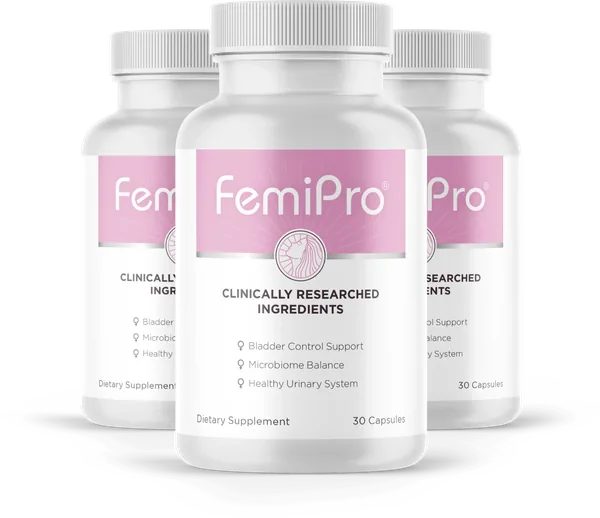
So what does that mean for a capsule you can actually buy?
It means the microbiome half of any oral product in this aisle is a plausible theory rather than a demonstrated effect. Our own product pages say the same thing, in the same words, on the page that sells it.
$49 to $69 a bottle · free US shipping · 60-day guarantee
Order FemiproAnd the strain codes nobody can look up
There is a second problem sitting underneath the first. NCCIH states plainly that probiotic effects are strain-specific: if one kind of lactobacillus helps with something, that does not mean another kind will, and it certainly does not mean a different genus will.
That makes a label naming its strains better than one that does not, and a fair number in this aisle now do. The question is whether the named strain has a trial record. Many of the codes printed on supplement labels are proprietary designations that return nothing at all in a literature search, which means the strain-specific caveat cuts against them: you cannot inherit the evidence for a studied strain by being the same species as it.
The trials above used CTV-05. If a label names a different L. crispatus strain, the honest reading is that you have a lactobacillus of the right species with its own, unpublished, record.
What to ask a probiotic label
Five questions, in order of how much they tell you:
- What route did the cited evidence use? Almost no label answers this and it is the most important question on the page.
- What is the colony forming unit count? Milligrams measure powder, including growth medium. CFU measures organisms, and it is the only figure that can be compared between products.
- Which exact strain, and does it have a trial? A named code is a start. A named code you can look up is better.
- Is the count guaranteed at expiry or at manufacture? Live organisms die in storage. A count at manufacture is the flattering number.
- How should it be stored? A label saying cool and dry is telling you something real about a live product, and a bathroom cabinet is the worst common place in a house.
The second of those is worth a post of its own, and it has one: CFU, not milligrams.
What a good oral probiotic claim would look like
It is easy to criticise and harder to say what would satisfy the criticism, so here is the standard this post is holding products to. An oral probiotic making a urogenital claim would need four things, none of which is unreasonable and none of which is common.
A trial of the same route. Not the same organism delivered differently. If the product is swallowed, the evidence should come from a swallowed product. Oral trials exist; they are the nine pooled in the Cochrane review, and they came out null. That is a fact about the oral literature rather than an absence of one.
A trial of the same strain. Species is not enough, because effects are strain-specific. CTV-05 having a good trial says nothing about a different L. crispatus strain with no published record.
A stated dose in colony forming units, guaranteed at expiry. Without it there is no way to know whether a product delivers what a trial delivered, even if everything else lines up.
An outcome that matters. A change in a stool or swab sample is a surrogate. Fewer infections, or fewer symptomatic days, is an outcome. The Lactin-V trial measured recurrence of a condition, which is why it is worth quoting at all.
How many products in this aisle meet all four? As far as we can establish, none. That is not an argument that they are useless; it is an argument that the confident microbiome language on most of them is running well ahead of what has been shown, and that a buyer reading a strain name should not assume a trial sits behind it.
It is also the standard our own product fails, on at least three of the four, which is stated on the ingredients page in the same terms.
The fair case for the other side
It would be dishonest to leave this without the counter-argument, so here it is.
A null Cochrane review is not proof of absence. Nine trials at high risk of bias is a thin evidence base, and the reviewers said so themselves: a benefit cannot be ruled out. Oral probiotics are cheap, they have an excellent safety record in healthy adults, and the underlying biology of lactobacillus dominance is not in dispute. If you take one and nothing happens, you have lost the price of a bottle.
What is not fair is a product page citing the suppository trials without saying they were suppository trials. That is the thing this post exists to flag, and the reason it is published on a website that sells an oral capsule containing L. crispatus is that we would rather you learned it here than found it afterwards. Our ingredients page says the same thing, and our how it works page lists the route gap as one of three reasons the mechanism is a theory rather than a finding.
Sources
- Ravel, the vaginal microbiome, 2011. Ravel J, Gajer P, Abdo Z, et al. Vaginal microbiome of reproductive-age women. Proceedings of the National Academy of Sciences. 2011;108(Suppl 1):4680-4687. View source
- Stapleton, L. crispatus for recurrent UTI, 2011. Stapleton AE, Au-Yeung M, Hooton TM, et al. Randomized, placebo-controlled phase 2 trial of a Lactobacillus crispatus probiotic given intravaginally for prevention of recurrent urinary tract infection. Clinical Infectious Diseases. 2011;52(10):1212-1217. View source
- Cohen, L. crispatus and bacterial vaginosis, 2020. Cohen CR, Wierzbicki MR, French AL, et al. Randomized trial of Lactin-V to prevent recurrence of bacterial vaginosis. New England Journal of Medicine. 2020;382(20):1906-1915. View source
- Cochrane review, probiotics and UTI, 2015. Schwenger EM, Tejani AM, Loewen PS. Probiotics for preventing urinary tract infections in adults and children. Cochrane Database of Systematic Reviews. 2015;(12):CD008772. View source
- Abdullatif, probiotics in premenopausal women, 2021. Abdullatif VA, Sur RL, Eshaghian E, et al. Efficacy of probiotics as prophylaxis for urinary tract infections in premenopausal women: a systematic review and meta-analysis. Cureus. 2021;13(10):e18843. Published in a journal with minimal peer review. View source
- NCCIH, probiotics usefulness and safety. National Center for Complementary and Integrative Health. Probiotics: Usefulness and Safety. National Institutes of Health. View source

Every page, every journal post, the bottle facts and the ingredients go through review by Dr. Jennifer Roelands, MD before they ship. We write these pages from the printed Femipro bottle and from the Supplement Facts panel photographed in our own stock images, cite public research for cranberry, bearberry, berberine, mimosa pudica and the named lactobacillus strains, and print “not published” wherever a figure is not disclosed rather than estimating it. This label publishes two blend totals and no individual amount, and that fact appears on every page where an ingredient is named. Where the seller’s marketing claims more than the bottle supports, we say so on the page. Corrections are made on the page itself and the review date moves forward. Write to [email protected]. Last reviewed September 2026 by Dr. Jennifer Roelands, MD.