Femipro Official Website › How it works
How Does Femipro Work? Two Routes in One Capsule
Femipro is built on two routes: cranberry proanthocyanidins and lactobacillus strains.
Cranberry proanthocyanidins may stop bacteria sticking to the bladder wall, and the lactobacillus strains may support the good bacteria that are normal in a healthy vaginal environment. Individual amounts are not printed on the label.
What the sales page says, what the biology says, and the gap between them.
The anti-adhesion idea behind Femipro
Stop the bacteria sticking, and they wash out.
Most uncomplicated urinary infections in women begin with E. coli attaching to the lining of the urinary tract using hair-like fimbriae. If the bacteria cannot attach, they are washed out. That is the whole theory behind cranberry, and it is a better theory than the one it replaced: the old explanation, that cranberry acidifies urine, was investigated and did not hold up.
Proanthocyanidins, specifically the A-type ones concentrated in cranberry, interfere with that attachment. The evidence for it is measurable in people: in a multicentre dose-ranging study in 32 volunteers, urine collected after cranberry powder showed anti-adhesion activity against uropathogenic E. coli in a dose-dependent way, still detectable at 24 hours with 72 mg of proanthocyanidin a day. That 24-hour persistence is the honest justification for a once-daily capsule.
Two things temper it. Anti-adhesion in an assay is a surrogate endpoint, not a clinical one, and the jump from an assay to fewer infections is exactly the jump that fails most often in medicine. And the Cochrane review, which pooled the clinical endpoints across 50 trials, found no demonstrable difference between low, moderate and high proanthocyanidin doses. A dose-response in the assay and no dose-response in the outcome is an awkward pair of findings, and you should know about both.
The microbiome idea behind Femipro
A real piece of biology, and a delivery problem the marketing does not mention.
The second half of the formula rests on a genuinely important piece of biology. Ravel and colleagues profiled 396 women and found that most vaginal communities fall into a handful of types, four of which are dominated by a single lactobacillus species: L. iners, L. crispatus, L. gasseri or L. jensenii. Those species produce lactic acid and hold the environment at a low pH, which is unfriendly to the organisms that cause trouble. The urinary tract is next door.
So the reasoning goes: support lactobacillus dominance, support the neighbourhood. Three of the five strains in this capsule are species that appear in that survey.
Here is what the reasoning does not survive. The Cochrane review of probiotics for preventing urinary tract infection found no significant benefit across nine trials. The best trial of L. crispatus specifically, a phase 2 study in 100 premenopausal women, produced a result in the right direction that did not reach significance. The one clearly positive randomised trial, Lactin-V for bacterial vaginosis, was a different condition. And critically, both of those trials delivered the organism into the vagina as a suppository. A capsule taken by mouth has to survive the stomach, transit the gut and then somehow reach a different anatomical site. That is not a small difference in delivery. It is a different intervention.
Because you can find it in ten minutes, and a site that omitted it would deserve to lose your trust on everything else. The microbiome story is the most attractive thing this formula has and it is the part with the weakest link between the theory and the delivery. If that changes your mind, the page has done its job.
The traditional half of the Femipro formula
Two botanicals with real chemistry, and one with almost no record.
Bearberry and berberine are the old guard. Bearberry leaf has been used for urinary complaints for centuries and its active, arbutin, is converted in the body and excreted into urine largely as hydroquinone, which has antiseptic properties. That is a real mechanism and it is also the reason for the traditional limit on how long a course should run.
Berberine is a plant alkaloid found in barberry, goldenseal and several other species. It has genuine antimicrobial activity in the laboratory and genuine systemic effects in people, mostly demonstrated on blood sugar and blood lipids. Its oral bioavailability is under one percent, which for a urinary product raises an obvious question the sales page does not address: how much of it reaches the urinary tract at all?
Mimosa pudica is listed first and is the outlier. Its traditional uses are mostly digestive and antiparasitic rather than urinary, and there is no human trial supporting any of them. We cover it in full on the Femipro ingredients page.
What has never been tested about Femipro
One sentence, and it is the most important on the page.
There is no clinical trial of Femipro. Not a small one, not an unpublished one, not one in progress that we are aware of. Every study cited anywhere on this website examined an ingredient, usually in isolation, usually at a dose this label does not print, and frequently by a different route of administration.
This is normal for the category and it is not a scandal. Running a trial on a finished supplement is expensive and few sellers do it. But normal is not the same as adequate, and the phrase Clinically Researched Ingredients on the front of the bottle is doing careful work: it says the ingredients have been researched. It does not say the product has. The FTC guidance on health claims is worth reading on exactly this distinction, and on the fact that implied claims need substantiating just as much as explicit ones.
| Established | Assumed |
|---|---|
| Cranberry proanthocyanidins reduce symptomatic UTI in women with recurrent infection | That the amount of cranberry in a 350 mg four-way blend is enough to do it |
| Anti-adhesion activity in urine is dose-dependent and lasts about 24 hours | That the same holds at whatever dose is in this capsule |
| Healthy vaginal communities are usually lactobacillus-dominated | That swallowing 50 mg of five strains changes that community |
| L. crispatus can be established vaginally by suppository | That an oral capsule achieves anything comparable |
| Berberine is systemically active despite poor absorption | That it reaches the urinary tract in a useful concentration |
| Bearberry contains arbutin, excreted as hydroquinone | That an unprinted fraction of 350 mg delivers a meaningful amount |
The left column is why this formula is not absurd. The right column is why nobody, including us, can tell you it will work for you.
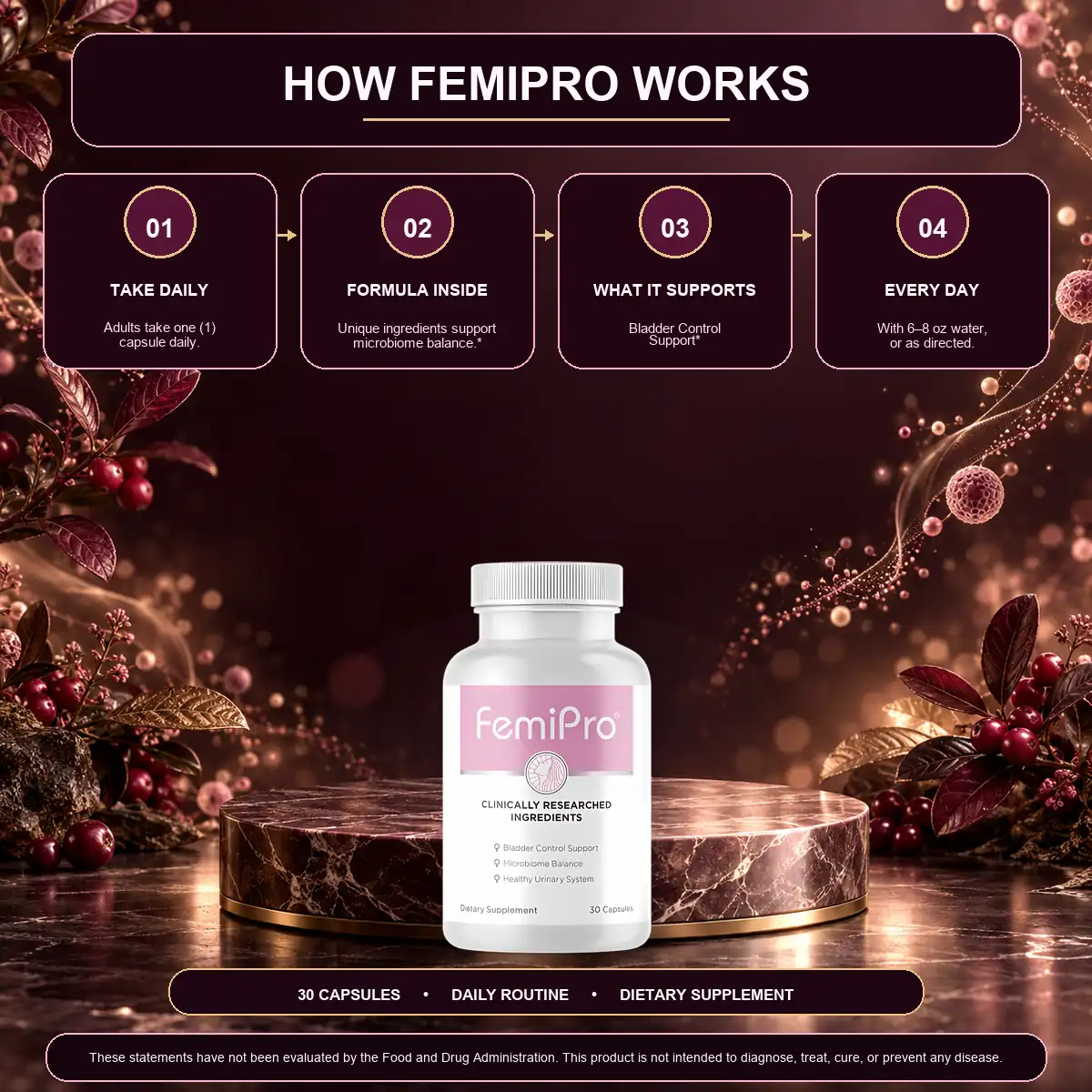
Step 1 is the dose. Step 3 restates a label claim. Step 4 is the dose again with the water. Only step 2 attempts a mechanism, in eight words. Everything on this page is what those eight words leave out.
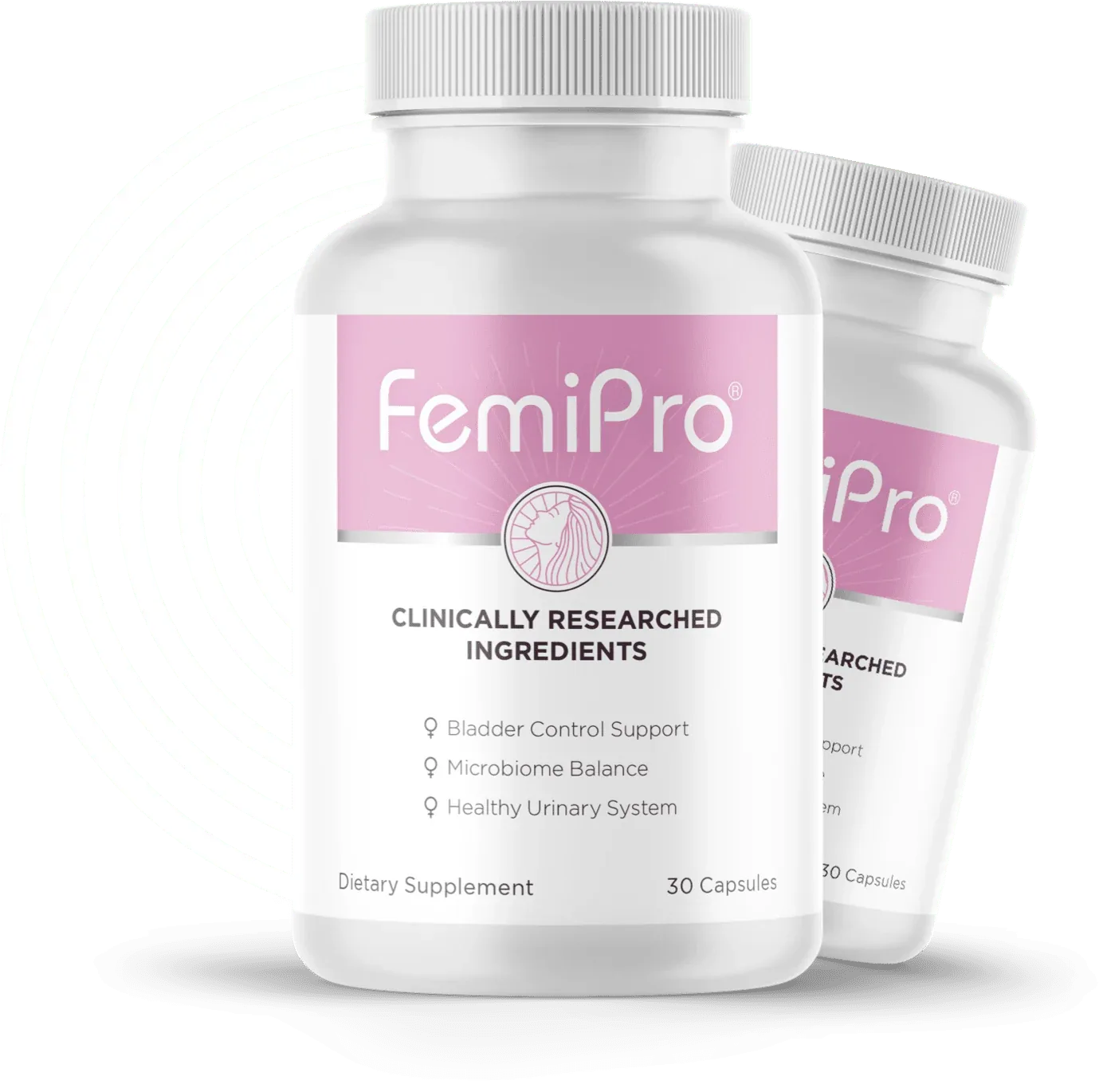
A 30-capsule bottle and a once-daily routine. Whatever the biology turns out to be worth, the practical intervention is one capsule and a large glass of water, which is a low bar to clear and easy to keep up.

Every page, every journal post, the bottle facts and the ingredients go through review by Dr. Jennifer Roelands, MD before they ship. We write these pages from the printed Femipro bottle and from the Supplement Facts panel photographed in our own stock images, cite public research for cranberry, bearberry, berberine, mimosa pudica and the named lactobacillus strains, and print “not published” wherever a figure is not disclosed rather than estimating it. This label publishes two blend totals and no individual amount, and that fact appears on every page where an ingredient is named. Where the seller’s marketing claims more than the bottle supports, we say so on the page. Corrections are made on the page itself and the review date moves forward. Write to [email protected]. Last reviewed September 2026 by Dr. Jennifer Roelands, MD.
Sources for how Femipro works
- Howell, proanthocyanidin dose and anti-adhesion, 2010. Howell AB, Botto H, Combescure C, et al. Dosage effect on uropathogenic Escherichia coli anti-adhesion activity in urine following consumption of cranberry powder standardized for proanthocyanidin content. BMC Infectious Diseases. 2010;10:94. View source
- Cochrane review, cranberry and UTI, 2023. Williams G, Stothart CI, Hahn D, Stephens JH, Craig JC, Hodson EM. Cranberries for preventing urinary tract infections. Cochrane Database of Systematic Reviews. 2023;11(11):CD001321. View source
- NCCIH, cranberry usefulness and safety. National Center for Complementary and Integrative Health. Cranberry: Usefulness and Safety. National Institutes of Health. View source
- Ravel, the vaginal microbiome, 2011. Ravel J, Gajer P, Abdo Z, et al. Vaginal microbiome of reproductive-age women. Proceedings of the National Academy of Sciences. 2011;108(Suppl 1):4680-4687. View source
- Stapleton, L. crispatus for recurrent UTI, 2011. Stapleton AE, Au-Yeung M, Hooton TM, et al. Randomized, placebo-controlled phase 2 trial of a Lactobacillus crispatus probiotic given intravaginally for prevention of recurrent urinary tract infection. Clinical Infectious Diseases. 2011;52(10):1212-1217. View source
- Cohen, L. crispatus and bacterial vaginosis, 2020. Cohen CR, Wierzbicki MR, French AL, et al. Randomized trial of Lactin-V to prevent recurrence of bacterial vaginosis. New England Journal of Medicine. 2020;382(20):1906-1915. View source
- Cochrane review, probiotics and UTI, 2015. Schwenger EM, Tejani AM, Loewen PS. Probiotics for preventing urinary tract infections in adults and children. Cochrane Database of Systematic Reviews. 2015;(12):CD008772. View source
- NCCIH, probiotics usefulness and safety. National Center for Complementary and Integrative Health. Probiotics: Usefulness and Safety. National Institutes of Health. View source
- Khoshandam, berberine pharmacokinetics, 2022. Khoshandam A, Imenshahidi M, Hosseinzadeh H. Pharmacokinetic of berberine, the main constituent of Berberis vulgaris L.: a comprehensive review. Phytotherapy Research. 2022;36(11):4063-4079. View source
- Schindler, arbutin excreted as hydroquinone, 2002. Schindler G, Patzak U, Brinkhaus B, et al. Urinary excretion and metabolism of arbutin after oral administration of Arctostaphylos uvae ursi extract as film-coated tablets and aqueous solution in healthy humans. Journal of Clinical Pharmacology. 2002;42(8):920-927. View source
- FTC health products compliance guidance. Federal Trade Commission. Health Products Compliance Guidance. Requires competent and reliable scientific evidence for health claims, and states that consumer testimonials cannot substitute for it. View source
Order Femipro with the mechanism understood
Two plausible routes, one delivery question the marketing skips, and no trial of the finished capsule. That is the honest position, and the guarantee is what makes it a reasonable bet rather than a blind one.
$49 to $69 a bottle · 60 days to change your mind
Order Femipro On The Official WebsiteOne-time payment, no subscription · free US shipping · 60-day money-back guarantee · lot FEM-26/FE-4936 · tracking and refunds +1 (302) 200-3480