Femipro Official Website › Reading room › Femipro for bladder control and urinary health
Is Femipro Good for Bladder Control and Urinary Health?
The Femipro label makes three support claims: Bladder Control Support, Microbiome Balance and Healthy Urinary System. They describe support, not treatment. The best-supported ingredient is cranberry. Nothing on the panel has been tested for bladder control itself, and the capsule has never had a trial. Pelvic floor training is the guideline first step for leaks.
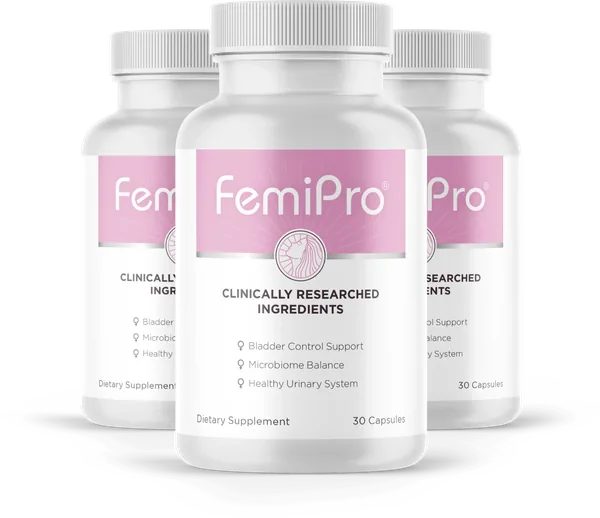
Want to see the label claims for yourself?
The order page and the printed label show the three claims and the FDA statement. Read both before you decide.
$49 to $69 a bottle · free US shipping · 60-day guarantee
See today’s price and guaranteeDisclosure: this site earns when you buy through its order links, which are marked sponsored.
- Three label claims: Bladder Control Support, Microbiome Balance and Healthy Urinary System.
- Type of claim: structure and function. Not a treatment for a urinary tract infection, urge, stress or mixed incontinence, or overactive bladder.
- Best-supported ingredient: cranberry, standardised to 30% proanthocyanidin. The amount is not published.
- Not tested for bladder control: no ingredient on the panel has been trialled with bladder control as the outcome.
- Guideline first step for leaks: pelvic floor muscle training, which is free.
- For: healthy adults aged 18 and over. The label and sales page are aimed at women.
Femipro is a dietary supplement. It is not FDA approved, and no dietary supplement is. It does not treat, cure or prevent any disease, and it is not a treatment for a urinary tract infection. Take medical questions to your doctor or pharmacist.
What does the Femipro label actually claim?
The front of the bottle prints three claims. Every one has a symbol that refers the reader to the FDA statement on the back.
| Claim | What it can mean | What it does not mean |
|---|---|---|
| Bladder Control Support | Daily support for something the body already does | A treatment for leaks, urgency or overactive bladder |
| Microbiome Balance | Five lactobacillus strains in a 50 mg blend | A proven effect, or a stated number of organisms |
| Healthy Urinary System | A herbal blend built around cranberry extract | A cure or prevention of a urinary tract infection |
The label also says “Clinically Researched Ingredients.” Read that closely. It says the ingredients have been researched. It does not say the finished capsule has been. No clinical trial of the finished capsule exists.
The FDA statement on the bottle says the claims have not been evaluated by the Food and Drug Administration, and that the product is not intended to diagnose, treat, cure or prevent any disease.
How strong is the support behind each claim?
| Claim | Rests mainly on | Support | Caveat |
|---|---|---|---|
| Healthy urinary system | Cranberry proanthocyanidins | Good | A Cochrane review of 50 trials found fewer symptomatic infections in women with recurrent infections. The dose here is not published, and the review found no dose-response for the active compound |
| Microbiome balance | Five lactobacillus strains | Weak | A Cochrane review found no clear benefit for probiotics against urinary infections. Both positive L. crispatus trials used a vaginal suppository |
| Bladder control support | The formula as a whole | Not directly studied | No ingredient has been tested with bladder control as the main outcome |
| Any claim, as this product | The finished capsule | None | No clinical trial of Femipro exists |
One claim reads well, one is weak, one is untested, and the last row applies to all three. That is the honest picture, and it differs from what a sales page might imply.
Which ingredients matter for bladder control?
People search for “ingredients for bladder control.” Here is a careful answer. Of the nine, none has been trialled as a bladder control aid.
- Cranberry has real research, but it concerns urinary infections, not bladder control.
- The lactobacillus strains have research on infections and on the vaginal microbiome. The two positive L. crispatus trials used a suppository.
- Bearberry has two unfavourable trials in women with infections.
- Berberine has been studied mostly for blood lipids, and it interacts with some medicines.
- Mimosa pudica seed has no human trial at any dose.
So the bladder control claim is a statement about support. It is not a finding. If bladder control is your main worry, the evidence points elsewhere.
What does the guideline say to do first?
The American College of Physicians recommends pelvic floor muscle training as the first step for stress incontinence, and bladder training for urgency incontinence. A Cochrane review found that women who did pelvic floor training were more likely to report cure or improvement, and a better quality of life, than women who did nothing. Programmes usually ran for three months or more.
These steps are free. They are described plainly by the NIDDK and MedlinePlus. A daily capsule can sit alongside them, but it should not replace them. If you start both in the same week, you will not know which one helped.
Leaks come in types, and what helps depends on the type. A clinician can tell stress, urge and mixed leaks apart. A capsule cannot.
What about urinary tract infections?
Femipro is not a treatment for a urinary tract infection. It must never be used instead of care, or to delay it.
See a clinician the same day for burning that is getting worse, fever, shivering, pain in the back or flank, or blood in the urine. These can mean an infection that has reached a kidney. NCCIH says directly that cranberry should not be used in place of treating an existing infection.
The cranberry evidence concerns lowering the chance of symptomatic infection in women who get them again and again. That is prevention research on cranberry, not a statement about this capsule.
Who is it a fair fit for, and who should skip it?
| A reasonable fit | A poor fit |
|---|---|
| Adults aged 18 and over who want daily support inside the three claims | Anyone pregnant, nursing or trying to conceive |
| Women who have spoken to a clinician and want something alongside, not instead of, their advice | Anyone under 18 |
| Anyone who can keep a once-a-day habit for two months | Vegetarians and vegans, because of the gelatin shell |
| Anyone on no prescription medicine, or whose pharmacist has checked the panel | Anyone on ciclosporin, metformin, a statin or digoxin, until a pharmacist has seen the panel |
| Anyone comfortable that individual amounts are not published | Anyone with a current infection hoping this will clear it |
Reduced kidney function is another reason to ask a clinician first, because the bearberry compound is excreted through the kidneys.
What should you expect, and when?
Expect a slow start. Reported changes here arrive after 4 to 8 weeks, and the first week is usually quiet. The 60-day guarantee runs from purchase, so decide by day 50.
Keep your expectations in line with the claims. The label says support. It does not say stop leaks. Score one symptom out of ten before you start and again at week four and week seven, and judge from your own numbers.
Frequently asked questions
Is Femipro good for bladder control?
The label claims bladder control support, not treatment. No ingredient on the panel has been tested with bladder control as the outcome, and the capsule has never had a clinical trial.
What are the three Femipro claims?
Bladder Control Support, Microbiome Balance and Healthy Urinary System. They are support claims, with the FDA statement that the product is not meant to diagnose, treat, cure or prevent any disease.
Does Femipro treat a urinary tract infection?
No, and it must never delay treatment. Burning that worsens, fever, flank pain or blood in the urine need a clinician the same day.
Which Femipro ingredient has the best evidence?
Cranberry, standardised to 30% proanthocyanidin. The research concerns urinary infections in women who get them repeatedly, and the amount in the capsule is not published.
Is Femipro a substitute for pelvic floor exercises?
No. Pelvic floor muscle training is the guideline first step for leaks and is free. A capsule can sit alongside it, not instead.
Is Femipro for women only?
The label and sales page are aimed at women, and the product is for healthy adults aged 18 and over. Anyone pregnant, nursing or under 18 should ask a physician.
Our view
Is Femipro good for bladder control and urinary health? We would say it is a modest, honest support product with one well-researched ingredient, and a lot that has not been shown. It is not a treatment, and the label never says it is.
If your concern is leaks, put pelvic floor training first, and see a clinician about the type you have. If your concern is repeated infections, see a clinician about prevention, because that needs a proper plan. A capsule can sit beside either one.
If you decide to try it, start small, keep notes, ask a pharmacist about your medicines, and use the 60-day guarantee if it does not suit you.
Comfortable with support, not treatment?
If a once-a-day capsule alongside proper care suits you, the checkout shows today's price and the 60-day guarantee.
$49 to $69 a bottle · free US shipping · 60-day guarantee
See today’s price and guaranteeDisclosure: this site earns when you buy through its order links, which are marked sponsored.
Last updated October 29, 2026. Written by the Femipros Editorial Desk and medically reviewed by Dr. Jennifer Roelands, MD on October 16, 2026. General information only; it does not replace a clinician who knows your history.
- Williams G, et al. Cranberries for preventing urinary tract infections. Cochrane Database of Systematic Reviews. 2023. View source
- Schwenger EM, et al. Probiotics for preventing urinary tract infections in adults and children. Cochrane Database of Systematic Reviews. 2015. View source
- Dumoulin C, et al. Pelvic floor muscle training versus no treatment for urinary incontinence in women. Cochrane Database of Systematic Reviews. 2018. View source
- Qaseem A, et al. Nonsurgical management of urinary incontinence in women: a clinical practice guideline from the American College of Physicians. Annals of Internal Medicine. 2014. View source
- NIDDK, bladder control problems in women. National Institute of Diabetes and Digestive and Kidney Diseases. View source
- MedlinePlus, urinary incontinence. National Library of Medicine. View source
- NCCIH, cranberry usefulness and safety. National Center for Complementary and Integrative Health. View source

Dr. Jennifer Roelands, MD, Physician, reviews the pages on this site. We write from the printed Femipro bottle and its Supplement Facts panel, cite public research by name, and print “not published” wherever the label gives no figure. Review date for this post: October 16, 2026. Questions or corrections: [email protected].