Femipro Official Website › Reading room › How does Femipro work?
How Does Femipro Work? The Two Ideas Behind the Capsule
Femipro rests on two ideas. Cranberry compounds may stop bacteria from sticking to the urinary tract, and lactobacillus strains may support the community that dominates a healthy vaginal environment. Both ideas are reasonable. Neither has been tested in this capsule, at these unpublished amounts, taken by mouth.
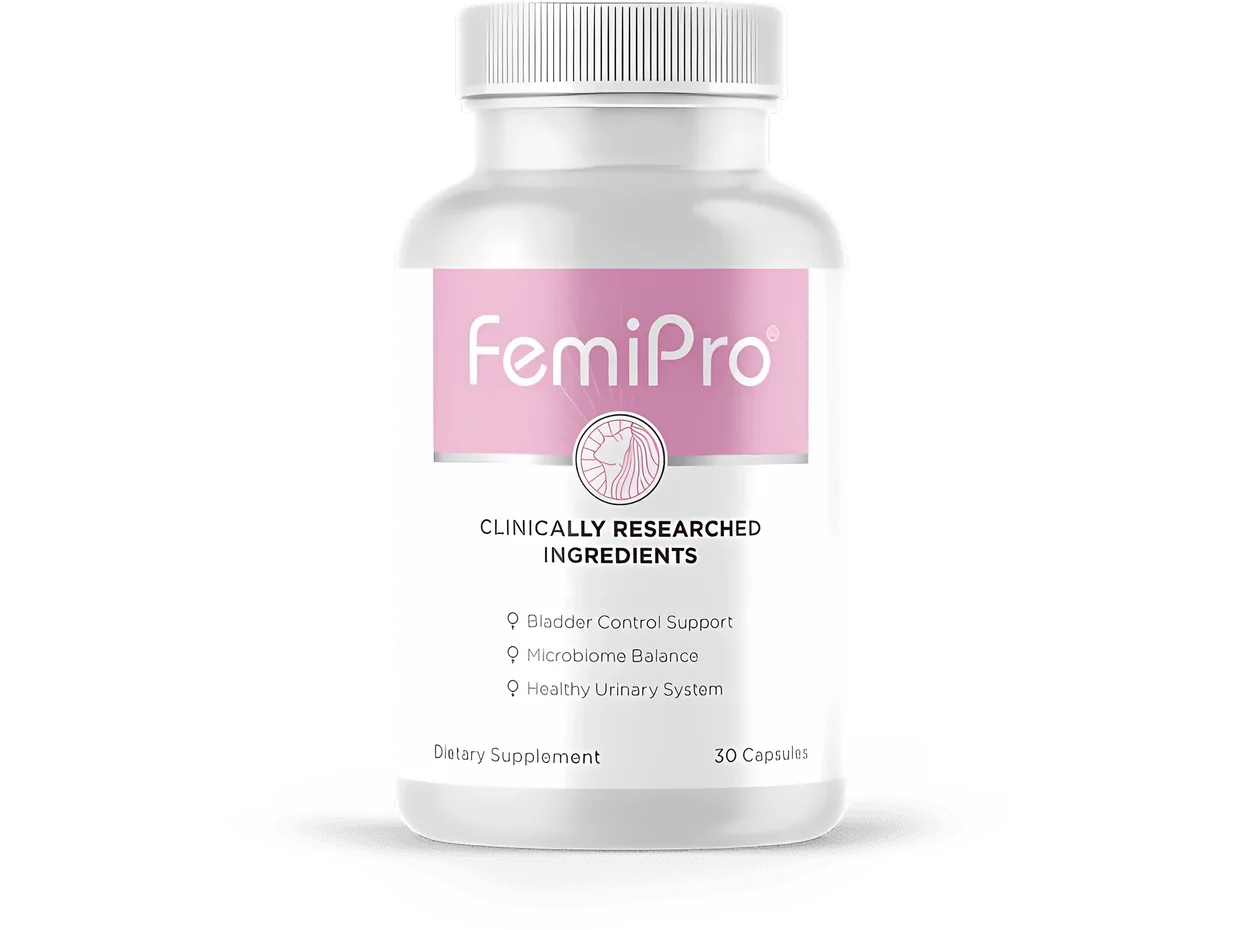
Curious how the pack options compare?
Femipro is one capsule a day, and the order page lists three pack sizes with a 60-day guarantee. You can look without committing to anything.
$49 to $69 a bottle · free US shipping · 60-day guarantee
See today’s price and guaranteeDisclosure: this site earns when you buy through its order links, which are marked sponsored.
- Idea one: cranberry proanthocyanidins may stop E. coli from attaching to the urinary tract lining.
- Idea two: lactobacilli may support the community that dominates a healthy vaginal environment.
- Traditional half: bearberry and berberine have real chemistry, but their role in a bladder capsule is unproven.
- Delivery gap: the best probiotic trials used a vaginal suppository. Femipro is a swallowed capsule.
- Never tested: there is no clinical trial of Femipro itself.
- Daily dose: 1 capsule with 6-8 oz of water, which is the only instruction on the label.
Femipro is a dietary supplement. It is not FDA approved, and no dietary supplement is. It does not treat, cure or prevent any disease, and it is not a treatment for a urinary tract infection. Take medical questions to your doctor or pharmacist.
How is Femipro supposed to work?
Think of the capsule as two small bets placed side by side. The herbal blend, 350 mg, is built around cranberry. The probiotic blend, 50 mg, holds five lactobacillus strains. The bottle's three claims line up with them: a healthy urinary system for the herbal side, microbiome balance for the probiotic side, and bladder control support for the formula as a whole.
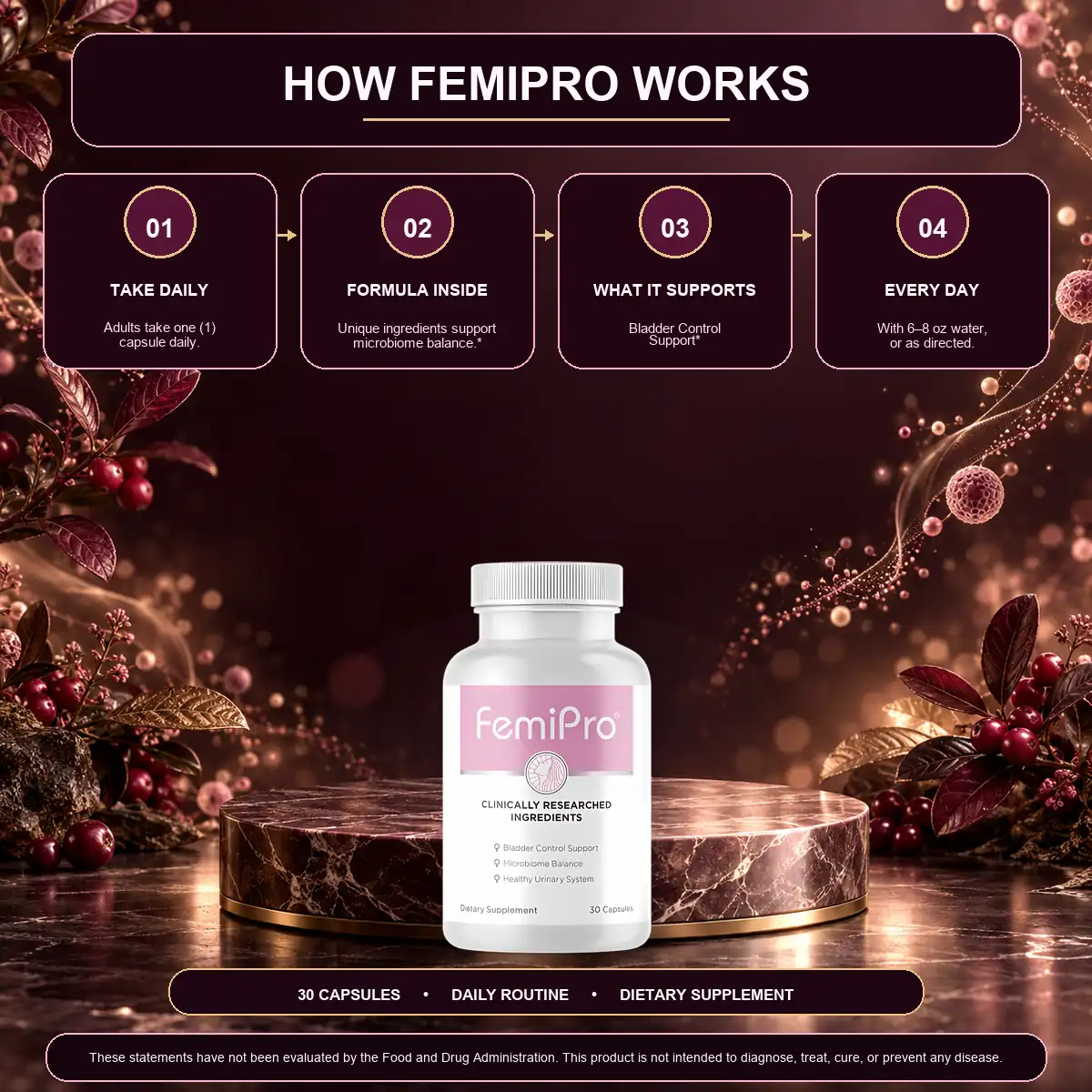
The seller's listing shows the idea as four numbered steps around a bottle. It gives a mechanism in very few words. This page fills in what those words leave out.
How could cranberry help the urinary tract?
Most uncomplicated urinary infections in women start when E. coli bacteria from the gut reach the urethra and stick to the lining. The hair-like fimbriae on the bacteria do the sticking. If they cannot attach, they are more likely to be flushed out when you pass urine.
Proanthocyanidins, often shortened to PACs, are the cranberry compounds thought to interfere with that sticking. This is a better-supported idea than the old one, that cranberry makes urine acid. That older explanation was checked and did not hold up.
There is human data for the sticking effect. In a dose-ranging study of 32 volunteers by Howell and colleagues, urine collected after cranberry powder blocked E. coli from attaching, and more PAC meant more blocking. The effect was still there at 24 hours with 72 mg of PAC a day. That is the reasoning behind a once-daily capsule.
Now the limits. Blocking sticking in a lab test is a stand-in measure, not a clinical result. And the Cochrane review of clinical outcomes found no clear difference between low, medium and high PAC doses. A dose effect in the test tube and none in the outcome is an awkward pair. We would rather you knew both.
How could the lactobacillus strains help?
The second idea starts with a large survey. Ravel and colleagues profiled the vaginal communities of 396 women and found that most fall into a few types. Four of those types are dominated by one lactobacillus species: iners, crispatus, gasseri or jensenii. These species make lactic acid and keep the environment acidic, which is unfriendly to organisms that cause trouble. The urinary tract sits next door.
So the reasoning runs: support the lactobacilli, and you support the neighbourhood. Three of the five strains in Femipro belong to species named in that survey.
Here is the weak link. The best L. crispatus trials delivered the organism into the vagina as a suppository. In the Stapleton phase 2 trial of 100 premenopausal women, recurrence was 15% on the probiotic and 27% on placebo, but the interval crossed 1, so it was not statistically significant. The clearer win, Lactin-V, was for bacterial vaginosis, a different condition. A capsule must survive the stomach and the gut and then somehow reach another body site. That is a different intervention.
What do bearberry, berberine and mimosa pudica add?
These three make up the old-fashioned half of the herbal blend.
- Bearberry leaf contains arbutin. The body turns it into hydroquinone, which leaves in the urine. About 65% of a dose was recovered that way in a human study. That is a real mechanism, and it is also why traditional guidance keeps bearberry courses short.
- Berberine is a plant alkaloid found in barberry and goldenseal. It is active in people, mostly shown for blood sugar and blood lipids. Under 1% is absorbed, so it is fair to ask how much reaches the urinary tract at all.
- Mimosa pudica seed is listed first on the panel, which often means the largest share. Its traditional uses are mostly digestive and antiparasitic. No human trial supports any urinary use.
What is known, and what is only assumed?
| Established by research | Assumed for this capsule |
|---|---|
| Cranberry PACs lower symptomatic UTI in women with recurrent infection | That the cranberry share of a 350 mg blend is enough to do it |
| Anti-adhesion in urine is dose-dependent and lasts about 24 hours | That the same holds at the unpublished dose in this capsule |
| Healthy vaginal communities are usually lactobacillus-dominated | That swallowing 50 mg of five strains changes that community |
| L. crispatus can be established vaginally by suppository | That an oral capsule does anything comparable |
| Berberine is active in the body despite poor absorption | That it reaches the urinary tract in a useful amount |
| Bearberry's arbutin is excreted as hydroquinone | That an unpublished share of 350 mg delivers a meaningful amount |
The left column explains why the formula is not absurd. The right column explains why no one, including us, can promise it will work for you.
What has never been tested?
The finished capsule. There is no clinical trial of Femipro. Every study here covers an ingredient, usually alone, usually at a dose the label does not print, and sometimes by a different route.
That is common in this category, and it is not a scandal. It is still not the same as adequate. The FTC's health products guidance asks for competent and reliable scientific evidence for health claims, and says testimonials cannot stand in for it.
What should you do with this information?
If the mechanism makes sense to you and you accept the gaps, treat Femipro as a daily habit with a 60-day exit. If you want something you can check, look at a single-ingredient cranberry product that prints its PAC amount. And if the real problem is leaks or urgency, ask about bladder training and pelvic floor muscle training first. They are free, and guidelines put them first.
None of this replaces a diagnosis. Three different problems get sold the same shelf product: recurrent infection, urge incontinence and stress incontinence. A clinician can tell them apart. A label cannot.
Frequently asked questions
How does Femipro work in simple words?
Cranberry compounds may stop bacteria from sticking to the urinary tract, and lactobacillus strains may support the healthy community near it. Both are ideas, and neither has been tested in this capsule.
Does cranberry really stop bacteria sticking?
In a study of 32 volunteers, urine after cranberry powder blocked E. coli from attaching, and the effect lasted about 24 hours at 72 mg of PAC a day. That is a lab measure, not a clinical result.
Why does it matter that the trials used a suppository?
The best L. crispatus results came from a suppository in the vagina. A capsule swallowed by mouth is a different route, so those results do not transfer.
Does Femipro treat a urinary infection?
No. It is not a treatment for a urinary tract infection, and cranberry should never replace treatment of an infection you already have.
Why are the amounts missing?
The label prints only two blend totals, 350 mg and 50 mg. It publishes no single amount and no colony forming unit count.
How much do I take?
Adults take 1 capsule daily with 6-8 oz of water, or as a healthcare professional directs. Do not exceed one capsule.
Our view
The mechanism story behind Femipro is tidy and partly true. Cranberry's anti-sticking effect is measurable. Lactobacillus communities do matter. We see no reason to call the formula nonsense.
But a tidy story is not a result. Each link in the chain has a gap: the dose, the route, or the evidence. The probiotic half is the most attractive and the least supported as a swallowed capsule. The cranberry half is the best supported, yet the amount is hidden.
Our advice is to hold the idea lightly. Try it if it appeals, track your own result, use the guarantee if the answer is no, and see a clinician for anything that burns, spikes a fever or does not settle.
Want the live price before you decide?
If the idea behind the capsule makes sense to you, the checkout shows today's price and guarantee terms for every pack.
$49 to $69 a bottle · free US shipping · 60-day guarantee
See today’s price and guaranteeDisclosure: this site earns when you buy through its order links, which are marked sponsored.
Last updated October 29, 2026. Written by the Femipros Editorial Desk and medically reviewed by Dr. Jennifer Roelands, MD on October 16, 2026. General information only; it does not replace a clinician who knows your history.
- Howell AB, et al. Dosage effect on uropathogenic Escherichia coli anti-adhesion activity in urine following consumption of cranberry powder standardized for proanthocyanidin content. BMC Infectious Diseases. 2010;10:94. View source
- Cochrane review, cranberry and UTI, 2023. Williams G, et al. Cranberries for preventing urinary tract infections. Cochrane Database of Systematic Reviews. 2023;11(11):CD001321. View source
- Ravel J, et al. Vaginal microbiome of reproductive-age women. Proceedings of the National Academy of Sciences. 2011;108(Suppl 1):4680-4687. View source
- Stapleton AE, et al. Randomized, placebo-controlled phase 2 trial of a Lactobacillus crispatus probiotic given intravaginally for prevention of recurrent urinary tract infection. Clinical Infectious Diseases. 2011;52(10):1212-1217. View source
- Cohen CR, et al. Randomized trial of Lactin-V to prevent recurrence of bacterial vaginosis. New England Journal of Medicine. 2020;382(20):1906-1915. View source
- Cochrane review, probiotics and UTI, 2015. Schwenger EM, et al. Probiotics for preventing urinary tract infections in adults and children. Cochrane Database of Systematic Reviews. 2015;(12):CD008772. View source
- Schindler G, et al. Urinary excretion and metabolism of arbutin after oral administration of Arctostaphylos uvae ursi extract. Journal of Clinical Pharmacology. 2002;42(8):920-927. View source
- Khoshandam A, et al. Pharmacokinetic of berberine, the main constituent of Berberis vulgaris L.: a comprehensive review. Phytotherapy Research. 2022;36(11):4063-4079. View source
- FTC, health products compliance guidance. Federal Trade Commission. View source
- NCCIH, probiotics usefulness and safety. National Center for Complementary and Integrative Health. View source

Dr. Jennifer Roelands, MD, Physician, reviews the pages on this site. We write from the printed Femipro bottle and its Supplement Facts panel, cite public research by name, and print “not published” wherever the label gives no figure. Review date for this post: October 16, 2026. Questions or corrections: [email protected].